China Accelerates Yangtze River Delta Integrated Development Plan
China launches a new 2024-2026 action plan to accelerate the Yangtze River Delta integrated development, unlocking cross-city metros and shared public services.


In July 2024, the national government officially released a massive three-year action plan (2024–2026) to accelerate the Yangtze River Delta integrated development (长三角一体化发展 - Chángsānjiǎo Yītǐhuà Fāzhǎn). This mega-region incorporates the Shanghai municipality alongside Jiangsu, Zhejiang, and Anhui provinces. Previously, cross-provincial commuting, business registration, and public services were strictly isolated by provincial borders, but the new update completely integrates the region with cross-city subway lines, unified digital services, and joint economic zones.
The New Regional Regulations Explained
The Yangtze River Delta covers only 4 percent of the country’s total land area but contributes nearly 25 percent of the national economic output. By 2025, the region will establish a highly connected 3-hour intercity transportation circle, completely changing how expats and locals navigate eastern China.
Here is exactly how the regional integration updates alter the economic and travel landscape:
| Regulatory Feature | Previous Rule / Historical Setup | New Rule / Current Update |
|---|---|---|
| Urban Transit | City-specific, isolated subway and bus networks. | Cross-city metro links, such as directly connecting Shanghai and Suzhou. |
| Household Registration | Strictly bound to the original issuing province. | Seamless cross-provincial household registration transfers at local police stations. |
| Public Services | Localized library, museum, and park access cards. | A single social security card valid across 110 museums and 160 parks region-wide. |
| Innovation Zones | Fragmented, independent provincial tech hubs. | Unified inter-provincial parks like the Shanghai-Suzhou-Dafeng Industrial Cluster. |
Immediate Impact & Practical Roadmap
Living and traveling in the Yangtze River Delta now requires less paperwork and offers massively upgraded mobility. To take full advantage of this integrated urban cluster, travelers and residents must follow these practical steps:
- Ride the Cross-City Metro: You can now ride a single subway train between different cities. For example, you can seamlessly transfer between Shanghai Metro Line 11 and Suzhou Metro Line 11 at the Huaqiao Station in Kunshan.
- Use One Card for Culture: Use your regional social security card to directly enter over 120 libraries, 110 museums, and 160 A-level tourist attractions across Shanghai, Jiangsu, Zhejiang, and Anhui without buying separate local tickets.
- Transfer Your Household Registration: If you are a resident moving between Shanghai, Zhejiang, Jiangsu, or Hefei (in Anhui), you can now apply to transfer your official household registration directly at your destination police station.
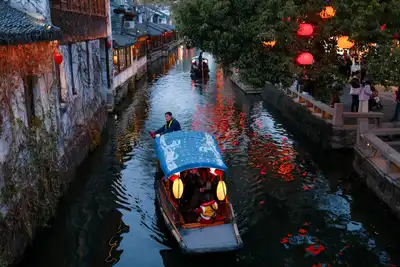
- Explore the “Water Town Parlor”: Visit the new 35.8-square-kilometer cross-provincial ecological zone that physically blends Jinze town (Shanghai), Lili town (Jiangsu), and Xitang and Yaozhuang towns (Zhejiang) into a single world-class cultural destination.
TIP
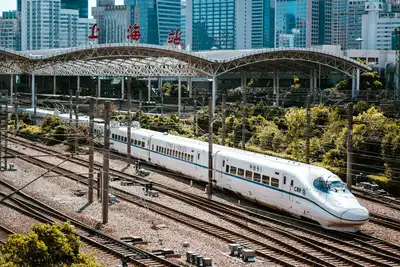
High-Speed Rail Expansion: The Hangzhou-Wenzhou High-Speed Railway officially opened in September 2024, cementing a “one-hour transportation circle” that links major urban areas and cities rapidly across Zhejiang province.
Operational Exceptions, Enforcement & Deadlines
While the integration highly simplifies daily life, there are specific strategic zones and joint environmental regulations that businesses and residents must strictly observe.
The demonstration zone for integrated ecological and green development heavily enforces joint environmental law enforcement and compensation schemes for ecological damage. Due to strict new industrial standards, the region has achieved excellent water quality and dropped fine particulate matter (PM2.5) concentrations by about 60 percent over the past decade.
CAUTION
Tech and Data Integration Security: Advanced technological integration is strictly tested before public commercial use. The “China Environment for Network Innovations (CENI)” facility connects the largest cities in China to verify the absolute performance and security of future network communications technology before it is rolled out.
Frequently Asked Questions
What is the Yangtze River Delta?
The Yangtze River Delta refers to the dynamic economic region south of the lower reaches of the Yangtze River, specifically encompassing the Shanghai municipality and the provinces of Jiangsu, Zhejiang, and Anhui.
What is the Water Town Parlor project?
The Water Town Parlor is a newly developed 35.8-square-kilometer cultural and ecological zone centered at the origin of the Yangtze River Delta, designed to seamlessly integrate traditional Jiangnan town landscapes across three different provincial borders.
Summary & Compliance Checklist
Before traveling or doing business in the newly integrated Yangtze River Delta, ensure you review these critical updates:
- Check Metro Connections: Use local map apps to navigate newly linked cross-city subway lines like the Shanghai-Suzhou transfer.
- Prepare Your Public Cards: Carry your regional social security card for instant access to museums and parks across all three provinces.
- Monitor Regional Tech Opportunities: Look into new cross-provincial industrial hubs like the Shanghai-Suzhou-Dafeng Industrial Cluster for potential business relocation.
- Enjoy the 3-Hour Circle: Utilize the expanded high-speed rail network to travel anywhere within the mega-region in under three hours.
Need Help Navigating the Yangtze River Delta? Contact Our Experts
Related News

EaziPath Editorial Staff
•Jun 15, 2025

EaziPath Editorial Staff
•Feb 1, 2023
EaziPath Editorial Staff
•Nov 20, 2024