Mastering the HSK: Chinese Language Learning and Exams
A complete guide to the Chinese proficiency system. Learn about HSK test types, how to find HSK 4 test centers in China, and tips for public speaking.


TL;DR: Administered by Chinese Testing International (CTI) under the guidance of the Ministry of Education (教育部 Jiàoyù Bù), the Chinese Proficiency Test (汉语水平考试 Hànyǔ Shuǐpíng Kǎoshì - HSK) is the standardized national exam required for university admissions, CGS scholarships, and work visa qualification points in China. Candidates can register for paper-based or internet-based exams, locate certified testing sites, and verify score reports directly through the official Chinese Testing Service Portal.
If you want to study or work as an expat in the country, passing the HSK (Hanyu Shuiping Kaoshi - 汉语水平考试) is often your ultimate goal. This official Chinese proficiency system evaluates your language skills through standardized test types required by universities and employers. This guide explains how to navigate the exams, find HSK 4 test centers in China, and master practical Chinese language learning.

1. Understanding the Chinese Proficiency System and Test Types
The Chinese proficiency system evaluates non-native speakers through highly standardized exams. The primary test types include the written HSK (evaluating reading, listening, and writing) and the spoken HSKK (evaluating oral fluency). Passing these tests is crucial for university admissions, securing scholarships, and meeting professional visa requirements.
| Exam Category | Chinese Name & Pinyin | Target Audience | Skills Evaluated |
|---|---|---|---|
| Written HSK | 汉语水平考试 (Hànyǔ Shuǐpíng Kǎoshì) | Academic & Professional Applicants | Listening comprehension, reading, and written Chinese. |
| Spoken HSKK | 汉语水平口语考试 (HSKK Kǒuyǔ Kǎoshì) | University & Scholarship Candidates | Spoken fluency, pronunciation, and oral comprehension. |
| BCT | 商务汉语考试 (Shāngwù Hànyǔ Kǎoshì) | Business Professionals | Corporate communication, contract reading, & workplace terms. |
| YCT | 中小学生汉语考试 (Zhōngxiǎoxuéshēng Kǎoshì) | Primary & Secondary Students | Fundamental vocabulary and everyday conversational skills. |
INFO
3 Stages, 9 Levels Framework: The Ministry of Education has systematically upgraded the HSK framework from the legacy 6-level system to a 3-stage, 9-level structure (Elementary: Levels 1–3, Intermediate: Levels 4–6, Advanced: Levels 7–9) to align with international CEFR language standards.
Is the HSK required for universities in China?
Yes. Most Chinese-taught degree programs strictly require international students to provide a valid HSK certificate (usually HSK 4 or higher) during the admission process. English-taught programs may not require it for initial admission, but you will often need to pass basic HSK levels to officially graduate.
2. How to Register at HSK 4 Test Centers in China
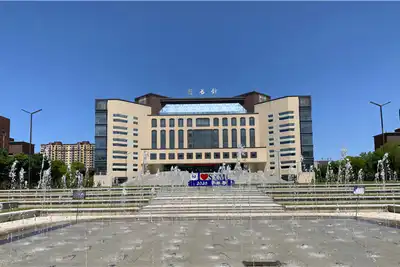
To officially take the exam, you must book your seat at a certified location. There are numerous HSK 4 test centers in China, usually located on major university campuses or at designated language institutes.
- Create an Online Profile: Visit the official Chinese Testing Service Website and register your real-name account using your passport details.
- Select Your Test Center: Choose a certified test center in your specific city or province. You can select either a paper-based test or an internet-based (computer) test.
- Upload Your Photo: Upload a standard, professional passport-style photo to your profile, which will be printed directly on your admission ticket.
- Pay the Exam Fee: Complete your digital payment before the strict registration deadline. If you do not pay on time, your seat will be automatically canceled.
- Print Your Ticket: Download and print your official admission ticket. You must bring this physical ticket and your original passport to the test center on exam day.
DANGER
Mandatory ID Matching: Do not forget your original physical passport on the day of the exam. If the ID details on your admission ticket do not perfectly match the physical passport you bring to the test center, you will be denied entry and your fee will not be refunded.
3. The Art of the Chinese Character (汉字)
To pass the HSK, you must dedicate significant time to mastering Chinese characters. Understanding the history and “radicals” (building blocks) of a character makes memorizing them much easier.
Consider the common character 公 (gōng), which means “public” or “communal”:
- Visual History: According to ancient Chinese dictionaries, the top part 八 (bā) means “to divide,” and the bottom part 厶 (sī) means “private.” Therefore, the character literally translates to the opposite of private.
- Everyday Vocabulary: You will see this character constantly in daily life and on the HSK exam in words like 公园 (gōngyuán - public park), 公厕 (gōngcè - public bathroom), or 公平 (gōngpíng - fairness).
By breaking down the characters into their visual stories, language learners can process and memorize complex vocabulary much faster.

4. Practical Language: Public Speaking in China
Passing an exam is only one part of language learning; practical application is another. If you transition from a university student to a corporate worker, you must learn how to “Take the Mic” and give speeches in Chinese.
In contrast to Western brevity models, a formal Chinese speech prioritizes professional etiquette, formal honorifics, and building workplace relationships (关系 - guānxi).
| Speaking Context | Chinese Phrase & Pinyin | English Translation |
|---|---|---|
| Formal Opening | 尊敬的…,女士们,先生们,下午好! (Zūnjìng de…, nǚshìmen, xiānshēngmen, xiàwǔ hǎo!) | ”Distinguished guests, ladies and gentlemen, good afternoon.” |
| Corporate Representation | 我代表… (Wǒ dàibiǎo…) | ”I represent [Organization / Company]…” |
| Expressing Gratitude | 我对…表示感谢! (Wǒ duì… biǎoshì gǎnxiè!) | ”I would like to express my sincere thanks to…” |
| Cultural Modesty | 我的汉语水平很一般。 (Wǒ de Hànyǔ shuǐpíng hěn yībān.) | ”My Chinese language level is really very ordinary.” |
TIP
Use Modesty to Your Advantage: Humor does not always translate well across cultures, but modesty is universally respected in China. Downplaying your language skills before a speech is a highly effective way to win over a local audience.

5. Frequently Asked Questions (FAQs)
Which HSK level is required for studying at a Chinese university?
Most undergraduate and graduate degree programs taught in Chinese require a minimum of HSK 4 or HSK 5. English-taught programs usually do not require HSK for entry, but passing basic levels (HSK 2 or 3) may be necessary prior to graduation.
Where can I register for HSK 4 test centers in China?
You can search for certified test centers across major universities and register directly on the official Chinese Testing Service Portal.
Can I take the HSK test online from home?
Yes. CTI offers an Internet-Based Test (Home Edition) in selected regions under strict remote proctoring conditions, alongside standard computer-based and paper-based tests at physical test centers.
What is the validity period of an HSK certificate?
For university admission and academic applications in China, HSK test scores are officially valid for two years from the test date.
Need Help Applying to a Chinese University? Contact Our Experts
Related Posts

EaziPath Editorial Staff
•Mar 20, 2024

EaziPath Editorial Staff
•Jan 4, 2025