Investing in China: How to Buy A-Share Stocks as a Foreigner
Learn how foreigners can open a securities account to buy A-share stocks in China. Understand the rules for Five-Star Card holders and investment registration.


TL;DR: Regulated by the China Securities Regulatory Commission (CSRC) (中国证监会), direct participation in mainland A-Share trading is restricted to specific foreign categories, including resident professionals, employees under corporate equity incentives, and Five-Star Permanent Resident Card (五星卡) holders from countries with established regulatory cooperation mechanisms. General foreign retail investors without local residency status are traditionally restricted to B-Shares or indirect fund vehicles unless qualifying under specific corporate sponsorship schemes.
To legally open a domestic securities account (证券账户 Zhèngquàn Zhànghù) in China and buy A-share stocks, you must fall into one of several strictly defined applicant categories. The required registration paperwork varies significantly depending on whether you hold permanent residency, work for a listed company, or currently reside overseas.

1. Eligibility and Registration Requirements
Foreigners cannot simply open a brokerage account online anonymously. You must provide strict identity verification based on your specific employment and residency status under CSRC cross-border cooperation guidelines.
| Applicant Category | Permitted Investment Class | Required Registration Materials |
|---|---|---|
| Foreigners Working in China (From CSRC-approved regulatory partner jurisdictions) | A-Shares | Valid passport (护照 Hùzhào), valid residence/work visa (签证 Qiānzhèng), and a local Chinese bank card (银行卡). |
| Permanent Residents (Holders of the Foreign Permanent Resident ID Card) | A-Shares | Foreign Permanent Resident ID Card (五星卡) and a local Chinese bank card. |
| Foreign Employees of A-Share Listed Companies (Local equity incentive plans) | A-Shares (Company stock only) | Corporate sponsorship documentation, valid passport, visa, and local bank card. |
| Foreign Employees of Listed Companies Working Abroad | A-Shares (Company stock only) | Valid passport, overseas equity program proof, self-regulatory commitment letter. |
| Foreign Founders (Joint-stock company founders listed on A-share exchanges) | A-Shares (Company stock only) | Corporate establishment records, business license, and identity verification files. |
| General Foreign Natural Persons (No local work residency) | B-Shares Only | Valid passport and a designated foreign currency bank account (USD/HKD). |
INFO
A-Shares vs. B-Shares Explained: A-shares are domestic renminbi-denominated equities traded on the Shanghai and Shenzhen stock exchanges. B-shares are quoted in RMB but settled in foreign currencies (USD in Shanghai, HKD in Shenzhen), traditionally serving as the primary vehicle for general foreign investors without mainland residency.

2. The “Five-Star Card” Advantage for Investors
For expatriates holding the updated Foreign Permanent Resident ID Card, commonly known as the Five-Star Card (五星卡 Wǔxīng Kǎ), the financial compliance and onboarding process is streamlined significantly:
- Online Account Opening: Because the Five-Star Card functions as a fully recognized national digital ID, major Chinese brokerages support remote online verification, eliminating mandatory initial branch visits.
- Integrated Financial Management: The card permits seamless linking across fund subscription platforms, wealth management accounts, and standard secondary market trading desks.
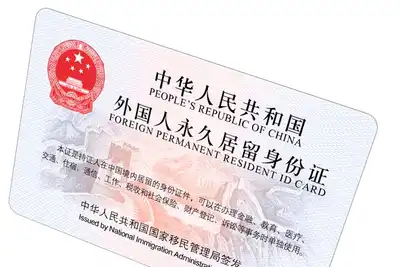
3. Direct Foreign Investment and Corporate Start-Ups
Beyond secondary market equities, foreign investors (individuals or corporate entities) may establish direct enterprise investments or joint-stock projects in China subject to government administrative tracks:
- The Approval System (核准 Hézhǔn): Projects falling within strategic national sectors outlined in official investment catalogues undergo rigorous pre-review and formal regulatory approval.
- The Filing System (备案 Bèi’àn): Commercial activities operating outside restricted catalogues utilize streamlined digital registration and municipal filing procedures.

4. Step-by-Step Guide to Buying A-Share Stocks
For qualified resident expats opening an account, follow this structured procedural workflow:
Establish Banking Prerequisites (Local Setup)
Secure an active local Chinese bank account and a real-name registered Chinese mobile phone number (+86).Visit a Licensed Broker (In-Person Verification)
Go in person to a major licensed Chinese brokerage firm (such as CITIC Securities or Haitong Securities) with your passport and legal credentials.Complete Risk Assessment (Mandatory Questionnaire)
Fill out the financial risk tolerance questionnaire to verify your investor profile and acknowledge market volatility parameters.Link Third-Party Depository (Fund Integration)
Sign the third-party bank depository agreement, securely binding your local Chinese bank account to your brokerage trading account.

5. Critical Tax and Foreign Exchange Considerations
Market participants must navigate PRC tax residency rules and capital controls when managing stock returns:
- The 183-Day Tax Rule: Individuals residing in China for 183 days or more in a tax year qualify as tax residents, subjecting capital gains and dividend earnings to domestic Individual Income Tax (IIT) regulations.
- Foreign Exchange Controls: While RMB funds can be invested freely locally, converting major capital gains back into foreign currency for offshore remittance requires presenting official tax clearance certificates to your bank.

Frequently Asked Questions (FAQs)
Can foreign tourists or non-resident foreigners buy A-shares?
Generally no. Direct retail A-share trading accounts require residency status, employment in a participating domestic company, or a Five-Star Permanent Resident Card tied to an approved CSRC regulatory jurisdiction. Non-resident individuals typically invest via international ETFs or B-shares.
What documents do foreign employees need to open an A-share account?
You must present your valid passport, current Chinese work visa, employment certificate from a registered domestic entity, and a local Chinese bank card linked to your identity.
Can investment profits be transferred out of China?
Yes, but capital repatriation is subject to strict foreign exchange administration. You must file local tax returns, pay applicable Individual Income Tax on capital gains, and provide tax clearance documentation to your commercial bank before converting RMB to foreign currency for overseas transfer.
Need Help Navigating Chinese Finance Laws? Contact Our Experts
Related Posts


EaziPath Editorial Staff
•Jun 11, 2024

EaziPath Editorial Staff
•May 15, 2024