Experience Weilu ZhuCha: China's Trendy Stove-Boiled Tea Houses
Discover the Weilu Zhucha trend in China. Learn about stove-boiled tea, popular minimalist teahouses, the costs, and how to roast your own snacks.
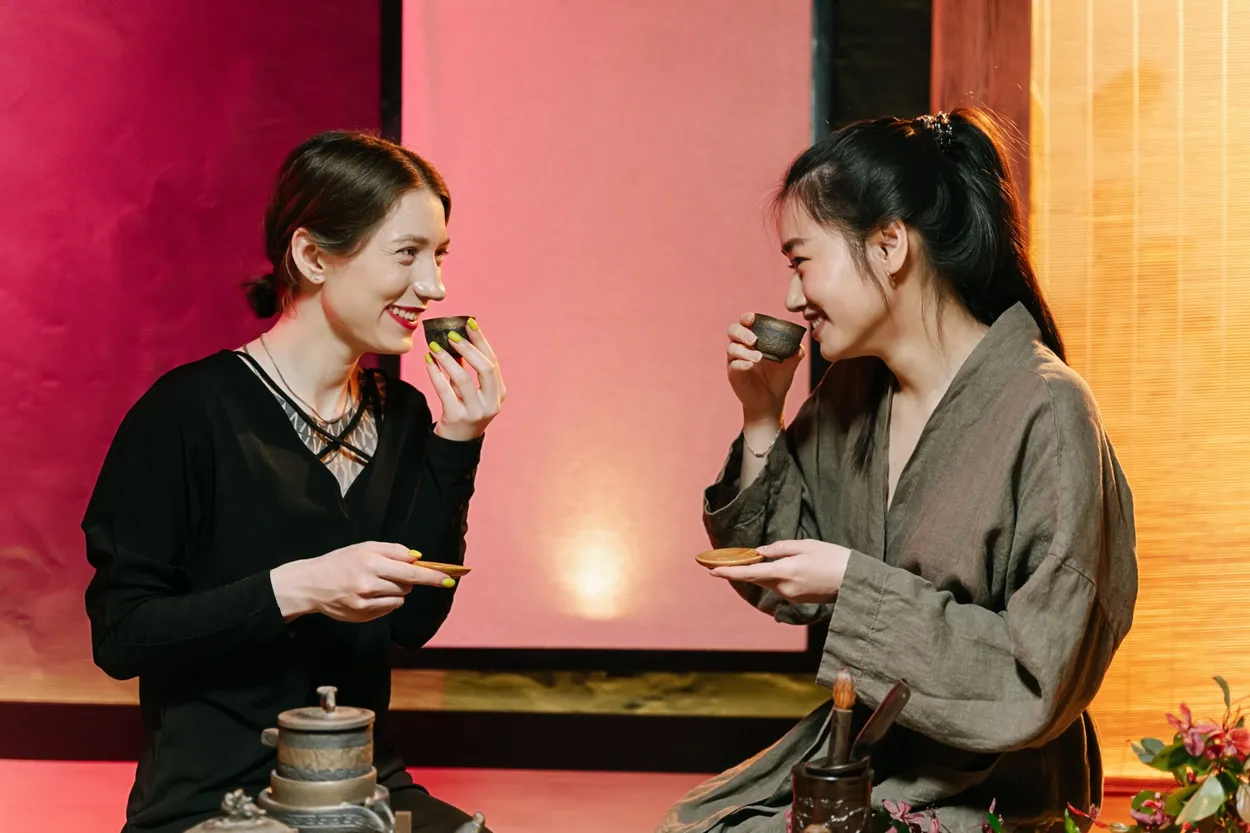

TL;DR: Weilu zhucha (围炉煮茶 wéi lú zhǔ chá), meaning “boiling tea around a stove,” has emerged as a major lifestyle and social media trend among urban youth in China. Blending traditional tea-brewing (煮茶) with slow-roasting snacks over charcoal, the experience merges ancient Song Dynasty aesthetics (宋代茶文化) with modern social gatherings in heritage hutongs and luxury tea houses.
Weilu zhucha (围炉煮茶), which translates to “boiling tea and sitting around a stove,” is a trendy cultural practice in China where young people gather to roast snacks and brew traditional tea over an open fire. This ancient practice of gathering to chat over tea has recently transformed into a massive modern lifestyle and social media phenomenon.

1. What is the Modern Weilu Zhucha Experience?
Once shunned by young consumers as old-fashioned and overly formal, traditional tea culture (茶文化 chá wénhuà) is undergoing a major revival. Modern teahouses have successfully lowered the barrier to tea appreciation, making it accessible and appealing to younger generations.
When visiting a contemporary teahouse in urban China, visitors encounter minimalist aesthetics that steer clear of traditional heavy mahogany furniture. Instead, these establishments focus on brewing whole tea leaves on-site, serving everything from classic Longjing green tea (龙井茶) to niche Oriental Beauty oolong (东方美人茶).
- Beijing (北京): Famous spots like “Whatever” teahouse are tucked away in historic alleyways (胡同 hútòng) across Dongcheng District.
- Shenzhen (深圳): Modern luxury tea brands like “Tea’stone” offer high-end counter service focused on premium single-origin leaves.
CAUTION
Wait times at popular historic hutong teahouses in Beijing can be extensive. Guests often wait up to two hours for a table during peak hours, even when booking a day in advance on review platforms like Dazhong Dianping (大众点评).
2. How Much Does Weilu Zhucha Cost?
Teahouses have become popular venues for corporate team-building, business meetings, and casual weekend social gatherings. Pricing depends on the venue type and tea selection:
| Experience Category | Inclusions | Price Range (RMB) |
|---|---|---|
| Full Group Package | Shared stove, pot of loose-leaf tea, and a basket of raw snacks for roasting. | 150 to 400 RMB |
| Pot of Premium Loose Tea | High-grade loose-leaf tea selection boiled over charcoal. | 128 to 388 RMB |
| Single Specialty Cup | Rare or aged tea masterfully brewed by a tea specialist. | 38 to 168 RMB |
INFO
Rare luxury loose-leaf teas, such as authentic Jinjunmei black tea (金骏眉) from Wuyishan in Fujian Province, can command prices exceeding several thousand RMB per kilogram for high-grade harvests.
3. How to Enjoy the Open Fire and Snacks
The centerpiece of the weilu zhucha experience is the tabletop stove (炭炉 tànlú). Guests receive a pot of tea and a platter of raw snacks to roast at their own pace.
The teapot sits in the center of the grill to simmer continuously. On the outer wire mesh, guests place seasonal snacks to roast slowly over the embers:
- Sweet Chestnuts (栗子 lìzi): Slowly roasted until the shells split open.
- Fresh Persimmons (柿子 shìzi): Warmed over the grill until sweet and soft.
- Sticky Rice Cakes (年糕 niángāo): Roasted until puffed and crispy on the outside.

4. The Social Media Trend and Industry Observations
The weilu zhucha movement expanded rapidly across Chinese social media, driven by lifestyle platforms like Xiaohongshu (小红书). Within a short period, over 100,000 posts tagged #围炉煮茶 were published, while thousands of new teahouse-related enterprises registered across mainland China.
Industry observers and tea scholars on Zhihu (知乎) have highlighted key factors surrounding the trend:
- Commercialization: Critics note that commercial packages sometimes prioritize photogenic setups over traditional tea preparation.
- Roasting Technique: Certain raw snacks require careful heat control on open grills to avoid burning or uneven cooking.
- Cultural Re-Engagement: Despite commercialization, the trend has successfully introduced millions of young urbanites to traditional Chinese tea categories and brewing methods.
5. Exploring Traditional Chinese Tea History
In November 2022, “Traditional tea processing techniques and associated social practices in China” were officially inscribed on UNESCO’s Representative List of the Intangible Cultural Heritage of Humanity.
The historical roots of Chinese tea drinking span thousands of years:
- Prehistoric Origins: Tea consumption is traditionally attributed to the mythical Emperor Shennong (神农), considered the father of Chinese agriculture and herbal medicine.
- The First Monograph: The first comprehensive treatise on tea cultivation and brewing was the Classic of Tea (《茶经》 Chájīng), authored by Lu Yu (陆羽) during the Tang Dynasty.
- Earliest Written Record: The earliest documented reference to tea trading appears in the Servant Contract (《僮约》 Tóng Yuē) by Western Han scholar Wang Bao (王褒).
- The Song Dynasty Expansion: During the Song Dynasty (960–1279 CE), tea became an essential household item, listed among the daily necessities alongside firewood, rice, oil, salt, sauce, and vinegar.
TIP
During the Song Dynasty, tea tasting was considered one of the “eight elegant hobbies” (八雅), alongside music, chess, calligraphy, painting, poetry, wine, and floral arrangement. Scholars engaged in tea competitions (斗茶 dòuchá) and froth art (茶百戏 chábǎixì).
6. The 6 Main Categories of Chinese Tea
While China produces over 2,000 distinct tea varieties, all authentic Chinese teas (中国茶) are classified into six fundamental categories based on their processing and oxidation levels:
- Green Tea (绿茶 lǜchá): Unfermented (e.g., Longjing / Dragon Well from Hangzhou).
- Black Tea (红茶 hóngchá): Fully oxidized (e.g., Jinjunmei and Lapsang Souchong from Fujian).
- White Tea (白茶 báichá): Minimally processed and dried (e.g., Fuding White Tea).
- Dark / Post-Fermented Tea (黑茶 hēichá): Aged and microbial-fermented (e.g., Pu’er from Yunnan).
- Yellow Tea (黄茶 huángchá): Lightly fermented through a unique “sweltering” process (闷黄).
- Oolong / Semi-Fermented Tea (乌龙茶/青茶): Partially oxidized (e.g., Dahongpao from Wuyi and Tieguanyin from Anxi).
Frequently Asked Questions (FAQs)
What does Weilu Zhucha mean?
Weilu zhucha (围炉煮茶) literally translates to “boiling tea around a stove.” It refers to the practice of gathering around a charcoal stove to slowly simmer tea and roast snacks while socializing with friends.
How much does a Weilu Zhucha set cost in Chinese cities?
In major cities such as Beijing, Shanghai, and Shenzhen, a complete group package typically costs between 150 and 400 RMB. This usually covers the stove setup, charcoal, a pot of specialty tea, and a platter of assortment snacks.
What snacks are typically served at a stove-boiled tea house?
Common roasting items include fresh persimmons (柿子), sweet chestnuts (栗子), sticky rice cakes (年糕), peanuts (花生), and sweet potatoes (红薯).
Need Help Planning Your Cultural Trip to China? Contact Our Experts
Related Posts
EaziPath Editorial Staff
•Aug 19, 2024
EaziPath Editorial Staff
•Nov 20, 2023

EaziPath Editorial Staff
•Feb 28, 2024