The Art of the Chinese Character: Exploring Meanings and History
Learn the deep history and modern meanings of essential Chinese characters like Zhi (wisdom), Lan (view), and You (travel).
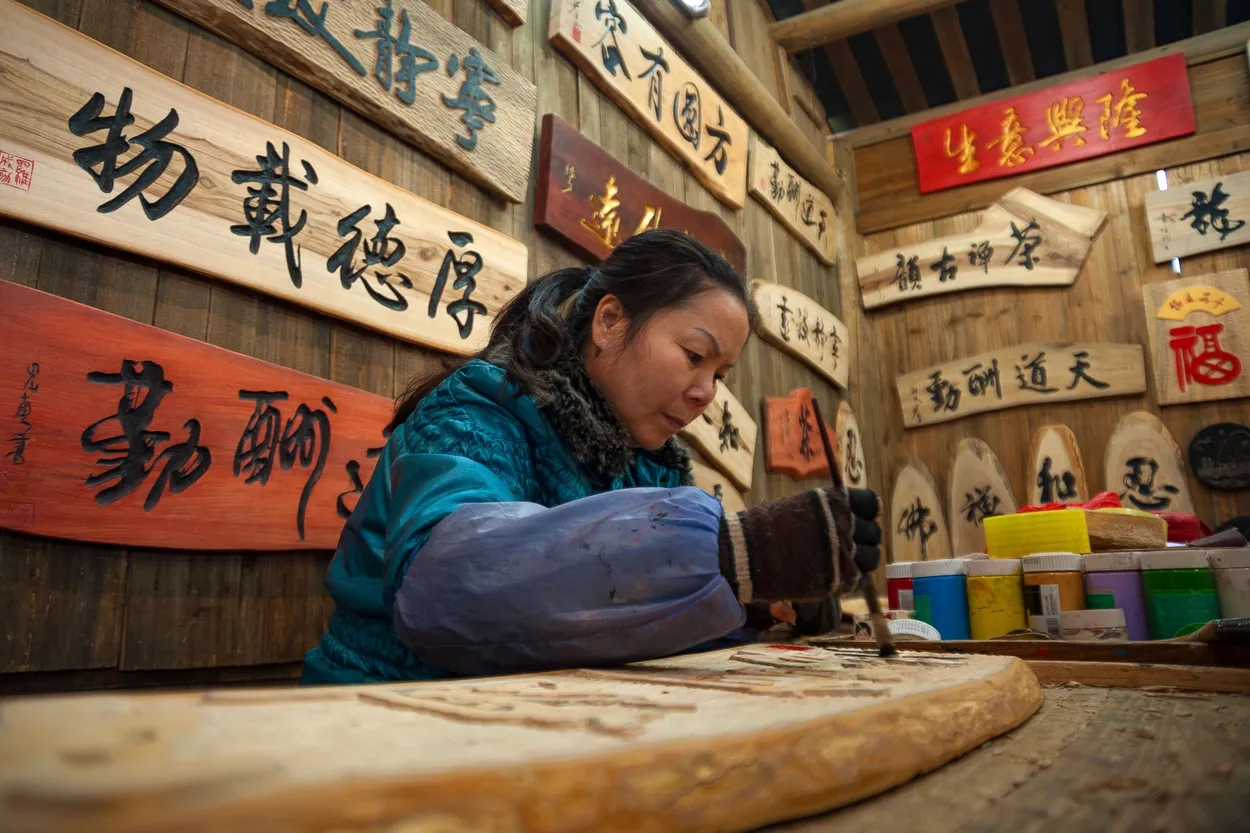

TL;DR: Chinese characters (汉字 Hànzì) are ancient ideograms that reveal China’s deep cultural evolution. By analyzing radicals and character history, you can understand how modern concepts like wisdom (智), travel (游), viewing (览), and connectivity (联) are formed today.
Chinese characters are more than just writing; they are ancient pictures that tell the story of China’s history, culture, and philosophy. By studying the radical parts and historical changes of these symbols, you can understand how modern Chinese people express concepts like wisdom, connection, and governance today.
1. Characters for Wisdom and Calculation
Understanding 智 (Zhì) – Wisdom
Appearing over 3,000 years ago on oracle bone script (甲骨文), this character originally combined 知 (zhī, knowledge) with a standing figure. During the Han dynasty, the 日 or 白 radical was integrated. Today, its core meaning of knowledge remains unchanged:
- Modern Intelligence: Used in everyday vocabulary like 智慧 (zhìhuì, wisdom) and 机智 (jīzhì, quick-witted).
- Digital Technology: Refers to smart technology, such as 智能手机 (zhìnéng shǒujī, smartphones) and 人工智能 (réngōng zhìnéng, artificial intelligence / AI).
DANGER
Be very careful with how you use intelligence words in China. While terms like 睿智 (ruìzhì, farsighted/wise) are high compliments, words like 弱智 (ruòzhì, weak intelligence) or 智障 (zhìzhàng, mentally handicapped) are highly pejorative.
Understanding 数 (Shù) – To Count / Mathematics
First appearing in bronze script (金文) during the Warring States period (475 – 221 BCE), the left component provided phonetic structure while the right depicted a hand tying a knot on a string to tally numbers.
- Mathematics: The foundation for terms like 数学 (shùxué, mathematics) and 代数 (dàishù, algebra).
- Top Performance: When pronounced as shǔ (third tone), it means to count or rank among the top, as in the idiom 数一数二 (shǔyī shǔ’èr, second to none / top-tier).

2. Characters for Journeys and Sightseeing
Understanding 游 (Yóu) – Travel and Flow
During the Spring and Autumn period (770 – 476 BCE), the water radical (氵) was added to the character, expanding its core meaning to include floating or moving through water.
- Physical Movement: Formally used in 游泳 (yóuyǒng, swimming).
- Mental Journeys: Describes moving through imagination, such as 梦游 (mèngyóu, sleepwalking) or 神游 (shényóu, letting one’s mind wander).
- Digital Worlds: Formulated in modern gaming terms like 电子游戏 (diànzǐ yóuxì, video games) or 手游 (shǒuyóu, mobile games).
Understanding 览 (Lǎn) – View and Look
Originating in small seal script (小篆) during the Qin dynasty, it combined 见 (jiàn, to see) with 监 (jiān, to oversee/reflect in water).
- Quick Browsing: To browse online or skim text is 浏览 (liúlǎn).
- Sightseeing: To visit scenic or historical sites is 游览 (yóulǎn).
- Public Displays: Paired to form 展览 (zhǎnlǎn, exhibition or trade show).
3. Characters for Connection and Assistance
The character 联 (lián) depicts linking by combining the ear radical (耳) with silk (糸), while 助 (zhù) denotes providing assistance with strength (力).
| Chinese Character | Original Meaning | Modern Business & Daily Use |
|---|---|---|
| 联 (lián) | Binding silk through an ear to “join” | 联系 (liánxì, Contact), 联盟 (liánméng, Alliance) |
| 联名 (liánmíng) | Joining names together | Co-branding / Brand Collaboration (e.g., Moutai x Luckin Coffee) |
| 助 (zhù) | To assist or lend strength | 帮助 (bāngzhù, Help), 守望相助 (shǒuwàng xiāngzhù, Mutual neighborhood support) |
| 治 (zhì) | To regulate water or heal | 治理 (zhìlǐ, Governance), 治疗 (zhìliáo, Medical treatment) |
INFO
The character 联 (lián) features an 耳 (ěr, ear) radical on the left and a 糸 (mì, silk) radical on the right, symbolizing the act of connecting or binding communication together.
Frequently Asked Questions (FAQs)
How old are Chinese characters?
Chinese characters are over 3,000 years old. They first appeared etched on oracle bones (甲骨文) during the Shang dynasty (1600 – 1046 BCE) as pictographs before evolving into simplified and traditional modern scripts.
What does the water radical mean in Chinese?
The water radical (氵, three-water drops / sānshuǐpáng) indicates that a character is physically or symbolically related to liquid, flow, or movement. For example, it was added to 游 (yóu) to incorporate swimming and floating.
How do I type Chinese internet slang?
You can type Chinese internet slang by using a standard Pinyin keyboard (拼音) on your smartphone or computer to enter character combinations and modern digital terms used across platforms like WeChat (微信) and Xiaohongshu (小红书).
Need Help Relocating and Living in China? Contact Our Experts
Related Posts
EaziPath Editorial Staff
•Aug 20, 2024

EaziPath Editorial Staff
•Mar 5, 2024

EaziPath Editorial Staff
•May 15, 2024